Your Own Ordering System for a Pizzeria: Keep the Commission in Your Business
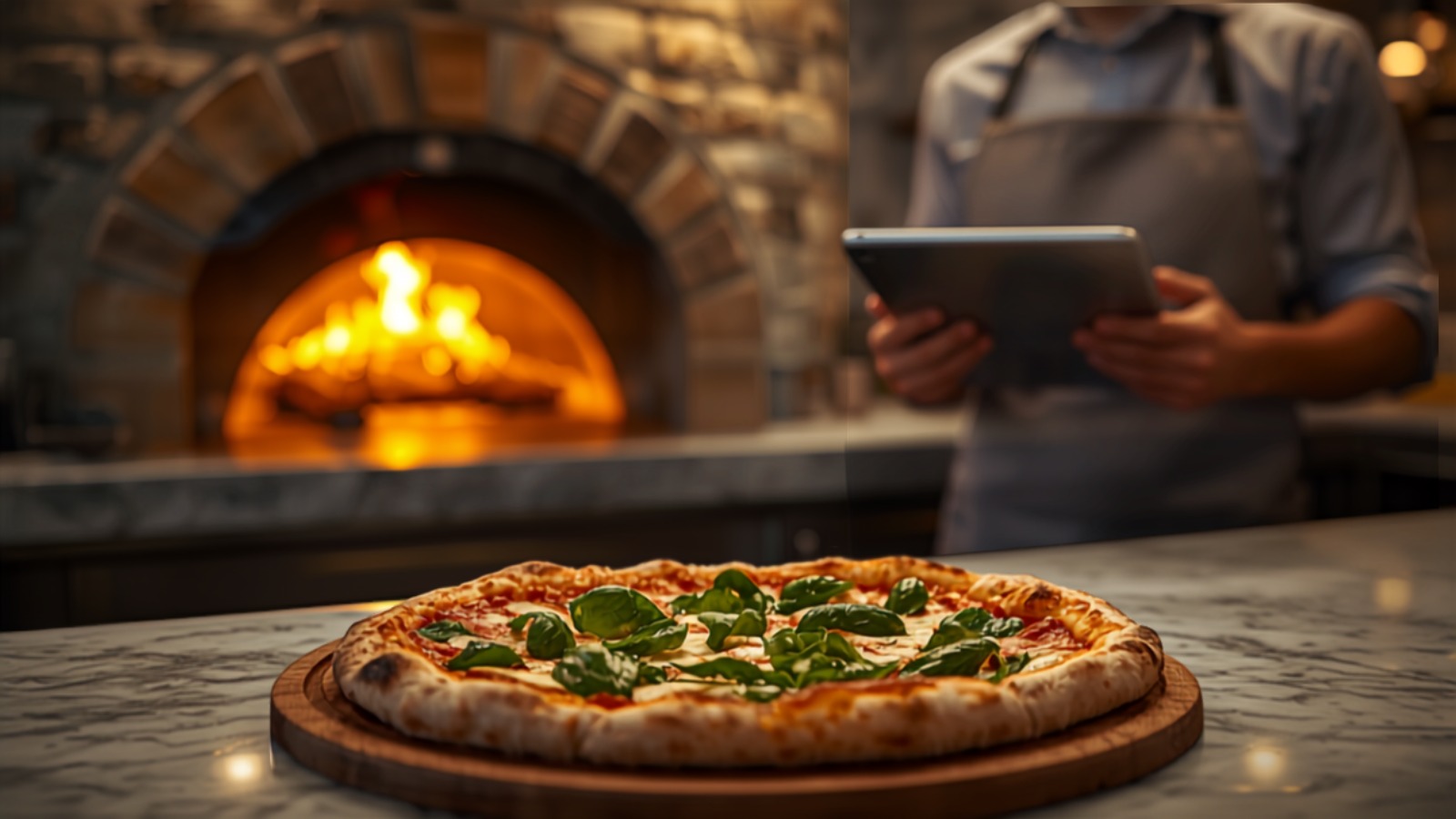
A busy pizzeria with an average order of 25 euros and 40 orders a day turns over roughly 30,000 euros a month in delivery. Run that through a delivery platform and, depending on the model, 4,000 to 9,000 euros a month stay with the platform, not with you. That is where your own ordering system starts to make sense. This guide shows what such a system has to do, what it looks like in practice and which routes lead to your own ordering shop.
What delivery platforms really cost
The large delivery portals charge, depending on whether they only broker or also deliver, roughly 13 to 30 percent commission per order. That sounds like a normal sales fee, but it hits the wrong place: the percentage is charged on revenue, not on profit. With typical gross margins in hospitality, an order via the platform can end up earning less than the same order taken over the phone.
A deliberately conservative example:
- Monthly delivery revenue: 25,000 euros
- Platform commission at 20 percent: 5,000 euros a month, or 60,000 euros a year
- Your own shop on a flat rate: a fixed three-digit monthly amount plus the usual payment fees
Even if at first only half your orders run through your own shop, the difference stays substantial. And it grows with every regular who orders directly with you next time instead of through the portal.
There is a second, often underestimated point: on the platform, the customer data is not yours. You do not learn who orders how often, you cannot win anyone back deliberately, and if a competitor next door spends more on advertising, you slide down the list. Your own shop reverses that relationship.
What your own ordering system has to do
Your own shop is only an alternative if it makes ordering just as convenient as the platform. Guests do not compare your costs; they compare the experience. These points decide it:
- A real configurator instead of a rigid item list: sizes, toppings and size-dependent surcharges have to be possible.
- Delivery zones with their own rules: minimum order value and delivery fee per zone, so the long trip still pays.
- Opening hours and pre-ordering: guests order in the evening for tomorrow lunchtime, and outside opening hours a clear notice appears.
- Ordering without an account: every forced login costs orders. Anyone who wants to can still create an account with several addresses.
- Online payment and cash: both have to work, otherwise you lose one of the two groups of guests.
- Mobile first: the vast majority of orders come from a smartphone.
It sounds obvious, but it is not: many cheap website builders already fail at size-dependent surcharges for extras, and with pizza that is the normal case.
The demo pizzeria: a finished system you can look at
So you do not have to rely on descriptions, we built the complete system as an ordering system for pizzerias and delivery services and made it publicly accessible. The live demo is not a click-through mockup but the real system: you can run the entire ordering process without signing up.
Three things stand out immediately:
The two-step configurator
First pick the size (for example 28 or 36 cm), then the extras. The surcharges adjust automatically to the chosen size: an extra on the large pizza simply costs more than on the small one. That is how it works on your menu, and that is how the shop has to model it.
A cart that thinks along
A progress bar shows how much is missing until free delivery. "Goes well with" recommendations lift the basket without being pushy. And every line can be changed in size or extras afterwards without being recreated, the most common reason for abandoning a mobile cart.
An app without an app store
The shop is built as a progressive web app. Your guests put it on their home screen as an icon and order with one tap from then on, no download, no app store fees, no forced updates.
Delivery zones, time slots and payment: the details that decide it
The difference between a shop that runs and one that causes trouble rarely lies in the big features. It lies in the everyday details:
- Delivery zones as a radius, polygon or postcode list. Anyone working with a radius alone will eventually deliver across a river or a motorway. A polygon maps your actual delivery area, each zone with its own minimum order value and fee. Collection always works, with no minimum.
- Time slots instead of chaos. Pre-orders for later spread the load out of the peak; the oven becomes plannable.
- Payment methods side by side. Stripe, PayPal and other methods are connected directly; cash on delivery or collection stays possible. Rule out cash and you lose exactly the regulars who have ordered that way for years.
- Status emails in your language. Received, being prepared, on the way, completed: every status change triggers an email. That replaces half the "where is my order?" calls.
- Vouchers and discount codes. You create promotions yourself, time-limited or for regulars.
Kitchen, receipt and drivers: the expansion stages
An ordering shop does not end at "order submitted". Only the path into the kitchen decides whether the evening stays calm. We add these building blocks on request, deliberately marked as extensions, not as part of the base:
- Kitchen monitor: orders appear on a screen in the kitchen, status by fingertip, no more slips of paper.
- Receipt printing: every order is printed automatically on the thermal printer, ready for the kitchen or the counter.
- Driver notification and tour overview: drivers are informed automatically and see their tour at a glance, across several locations too.
- Your own campaigns: newsletters, promotions and loyalty discounts for repeat orders without a platform fee.
Not just pizza: any cuisine, several locations too
Configurator, delivery zones and payment work for any business with delivery or collection: Asian takeaway, burgers, doner, sushi, chips or Indian food. The demo pizzeria is only the shop window; the foundation is cuisine-independent.
Multi-site operation is built in as well: owners of several outlets or small chains manage all branches in one interface, each with its own menu, delivery zones and opening hours. In practice, a single instance currently serves around 20 restaurants at the same time.
Two routes to your own ordering shop
There are two routes, and both are considerably cheaper than platform commission:
1. Your own installation
We set up the complete ordering system exclusively for your business: individual design, your own domain, special requests straight from development. You pay either a small commission or a fixed monthly price, and we agree the terms with you. This route makes sense if you need your own workflows, interfaces or a very distinct design.
2. The full service on bestelltheke.de
Faster and cheaper is our own platform bestelltheke.de. There you book your preferred model directly online: a small commission or a flat rate with no commission at all, cancellable monthly, your own domain including hosting and SSL. We handle the complete setup for a one-off 49 euros: we install the shop, enter every product from your menu and configure payment methods, delivery zones and opening hours. Essentially all you have to do is take orders.
You can switch between the two routes at any time, so nothing is set in stone.
How to get orders without a platform
The honest answer: you do not get the platform's reach for free; you build it. That works faster than most expect, because your guests already know you:
- Google Business Profile with a direct ordering link: the single biggest lever for local searches.
- QR code on receipts, flyers, pizza boxes and the counter: every delivered order advertises the next direct one.
- A small incentive the first time, such as a voucher code for the first order in your own shop. A one-off two euros off is cheaper than 20 percent commission forever.
- Collect reviews actively: after the order, guests are asked specifically for a Google review, more visibility, more trust.
Many businesses run both tracks at first: the platform for new customers, their own shop for regulars. That is a perfectly legitimate transition, and the balance shifts over time on its own.
Operated legally and in Germany
An ordering shop processes addresses, phone numbers and payment data. So the system includes the legally required order button wording, imprint, privacy policy, terms and correct base-price information. Fonts and maps run locally, so without third-party tracking. Hosting is in Germany.
Technically it all sits on an open-source foundation (TastyIgniter on Laravel): no licence cost per order, no vendor lock-in. The software is yours, not a platform's that can change its terms tomorrow.
Conclusion
The question is rarely whether your own ordering shop pays off. At the usual commission rates it already does with a modest delivery business. The real question is whether the system is as convenient day to day as the platform. That is what the demo pizzeria is built for: configurator, delivery zones, payment and order management are finished and verifiable live. Take your time with the demo, book the full service on bestelltheke.de, or talk to us if you need your own installation with special requirements.
Frequently asked questions
What does your own ordering system for a pizzeria cost?
There are two routes: your own installation with a small commission or fixed monthly price, or the full service on bestelltheke.de with a small commission or a flat rate with no commission at all, cancellable monthly. Setup including the menu, payment methods and delivery zones costs a one-off 49 euros. Either way you stay well below the 13–30% commission charged by delivery platforms.
Can I run my own ordering system alongside a delivery platform?
Yes, and for many businesses that is the sensible way in: the platform keeps bringing new customers while your own shop gradually takes over the regulars. With QR codes on receipts, an ordering link in your Google profile and a small first-order voucher, the balance usually shifts faster than expected.
Does the system also work for doner, sushi or burgers?
Yes. The configurator, delivery zones and payment handling are cuisine-independent; the demo pizzeria is just the example. Asian takeaway, burgers, doner, sushi, chips or Indian food work the same way, as do several locations in one interface.
How long until my ordering shop is online?
The full service is fastest: after booking we set up the shop, menu, payment methods and delivery zones, usually within a few days, depending on how quickly we receive your menu and logo. An individual installation with a custom design and special requirements takes correspondingly longer.
See the software in action
Try every trade edition live (no signup) or get it in the shop.